![[ Back to EurekAlert! ]](http://www.eurekalert.org/images/back2e.gif) Public release date: 13-Mar-2013
Public release date: 13-Mar-2013[ | E-mail |
 Share ]
 Contact: Emma Thorne
emma.thorne@nottingham.ac.uk
44-011-595-15793
University of Nottingham
The stick can work just as well as the carrot in improving our performance, a team of academics at The University of Nottingham has found.
A study led by researchers from the University's School of Psychology, published recently in the Journal of Neuroscience, has shown that punishment can act as a performance enhancer in a similar way to monetary reward.
Dr Marios Philiastides, who led the work, said: "This work reveals important new information about how the brain functions that could lead to new methods of diagnosing neural development disorders such as autism, ADHD and personality disorders, where decision-making processes have been shown to be compromised."
The Nottingham study aimed at looking at how the efficiency with which we make decisions based on ambiguous sensory information such as visual or auditory is affected by the potential for, and severity of, anticipated punishment.
To investigate this, they asked participants in the study to perform a simple perceptual task asking them to judge whether a blurred shape behind a rainy window is a person or something else.
They punished incorrect decisions by imposing monetary penalties. At the same time, they measured the participants' brain activity in response to different amounts of monetary punishment. Brain activity was recorded, non-invasively, using an EEG machine which detects and amplifies brain signals from the surface of the scalp through a set of small electrodes embedded in a swim-like cap fitted on the participants' head.
They found that participants' performance increased systematically as the amount of punishment increased, suggesting that punishment acts as a performance enhancer in a similar way to monetary reward.
At the neural level, the academics identified multiple and distinct brain activations induced by punishment and distributed throughout different areas of the brain. Crucially, the timing of these activations confirmed that the punishment does not influence the way in which the brain processes the sensory evidence but does have an impact on the brain's decision maker responsible for decoding sensory information at a later stage in the decision-making process.
Finally, they showed that those participants who showed the greatest improvements in performance also showed the biggest changes in brain activity. This is a key finding as it provides a potential route to study differences between individuals and their personality traits in order to characterise why some may respond better to reward and punishment than others.
A more thorough understanding of the influence of punishment on decision-making and how we make choices could lead to useful information on how to use incentive-based motivation to encourage certain behaviour.
###
The paper, Temporal Characteristics of the Influence of Punishment on Perceptual Decision Making in the Human Brain, is available online via the Journal of Neuroscience.
[ | E-mail | Share ] ?
AAAS and EurekAlert! are not responsible for the accuracy of news releases posted to EurekAlert! by contributing institutions or for the use of any information through the EurekAlert! system.
Public release date: 13-Mar-2013[ | E-mail |
Share ] Contact: Emma Thorne
emma.thorne@nottingham.ac.uk
44-011-595-15793
University of Nottingham
The stick can work just as well as the carrot in improving our performance, a team of academics at The University of Nottingham has found.
A study led by researchers from the University's School of Psychology, published recently in the Journal of Neuroscience, has shown that punishment can act as a performance enhancer in a similar way to monetary reward.
Dr Marios Philiastides, who led the work, said: "This work reveals important new information about how the brain functions that could lead to new methods of diagnosing neural development disorders such as autism, ADHD and personality disorders, where decision-making processes have been shown to be compromised."
The Nottingham study aimed at looking at how the efficiency with which we make decisions based on ambiguous sensory information such as visual or auditory is affected by the potential for, and severity of, anticipated punishment.
To investigate this, they asked participants in the study to perform a simple perceptual task asking them to judge whether a blurred shape behind a rainy window is a person or something else.
They punished incorrect decisions by imposing monetary penalties. At the same time, they measured the participants' brain activity in response to different amounts of monetary punishment. Brain activity was recorded, non-invasively, using an EEG machine which detects and amplifies brain signals from the surface of the scalp through a set of small electrodes embedded in a swim-like cap fitted on the participants' head.
They found that participants' performance increased systematically as the amount of punishment increased, suggesting that punishment acts as a performance enhancer in a similar way to monetary reward.
At the neural level, the academics identified multiple and distinct brain activations induced by punishment and distributed throughout different areas of the brain. Crucially, the timing of these activations confirmed that the punishment does not influence the way in which the brain processes the sensory evidence but does have an impact on the brain's decision maker responsible for decoding sensory information at a later stage in the decision-making process.
Finally, they showed that those participants who showed the greatest improvements in performance also showed the biggest changes in brain activity. This is a key finding as it provides a potential route to study differences between individuals and their personality traits in order to characterise why some may respond better to reward and punishment than others.
A more thorough understanding of the influence of punishment on decision-making and how we make choices could lead to useful information on how to use incentive-based motivation to encourage certain behaviour.
###
The paper, Temporal Characteristics of the Influence of Punishment on Perceptual Decision Making in the Human Brain, is available online via the Journal of Neuroscience.
[ | E-mail | Share ] ?
AAAS and EurekAlert! are not responsible for the accuracy of news releases posted to EurekAlert! by contributing institutions or for the use of any information through the EurekAlert! system.
Source: http://www.eurekalert.org/pub_releases/2013-03/uon-pce031313.php
steve jones emily maynard kola boof burmese python ferris bueller god bless america earned income credit


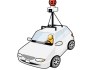 After a week of rumors, this doesn’t come as a huge surprise anymore: Google today settled the privacy case brought against it by 37 states and the District of Columbia. In total, Google will pay $7 million dollars, a number that isn’t going to cause a lot of sleepless nights at company headquarters. Every state will get a share of the $7 million, so even the eight lead states that investigated this matter for the last two years will only get $520,823. The other states will get roughly $147,000. In 2010, Google was accused of collecting some private Wi-Fi payload data while its Street View vehicles were on the road and taking images in the U.S. and Europe. Google first denied that this ever happened, but the company later confirmed that this was indeed the case, though it also argued that this was “a mistake.” In 2006, Google argued, one of its engineers developed some code to collect this data for an experimental project and this code somehow found its way into the Street View code, as well. ?While the $7 million is significant, the importance of this agreement goes beyond financial terms. Consumers have a reasonable expectation of privacy. This agreement recognizes those rights and ensures that Google will not use similar tactics in the future to collect personal information without permission from unsuspecting consumers,? Connecticut’s Attorney General George?Jepsen said in a statement today. The terms of the settlement also state that Google will “engage in a comprehensive employee education program about the privacy or confidentiality of user data.” The company also has to run a nationwide campaign to teach consumers about how to secure their wireless networks. This campaign, the settlement states, will “include a YouTube video instructing users ‘how-to’ encrypt their wireless networks,” as well as “daily online ads for two years promoting the video; a Google Public Policy Blog post explaining the value of encrypting wireless networks and linking to the video; half-page advertisements in national and state newspapers; and production of an educational pamphlet about online safety and privacy which incorporates information about WiFi security.” Unsurprisingly, the settlement also states that Google has to destroy all the private data its Street View cars collected between 2008 and March 2010.


